

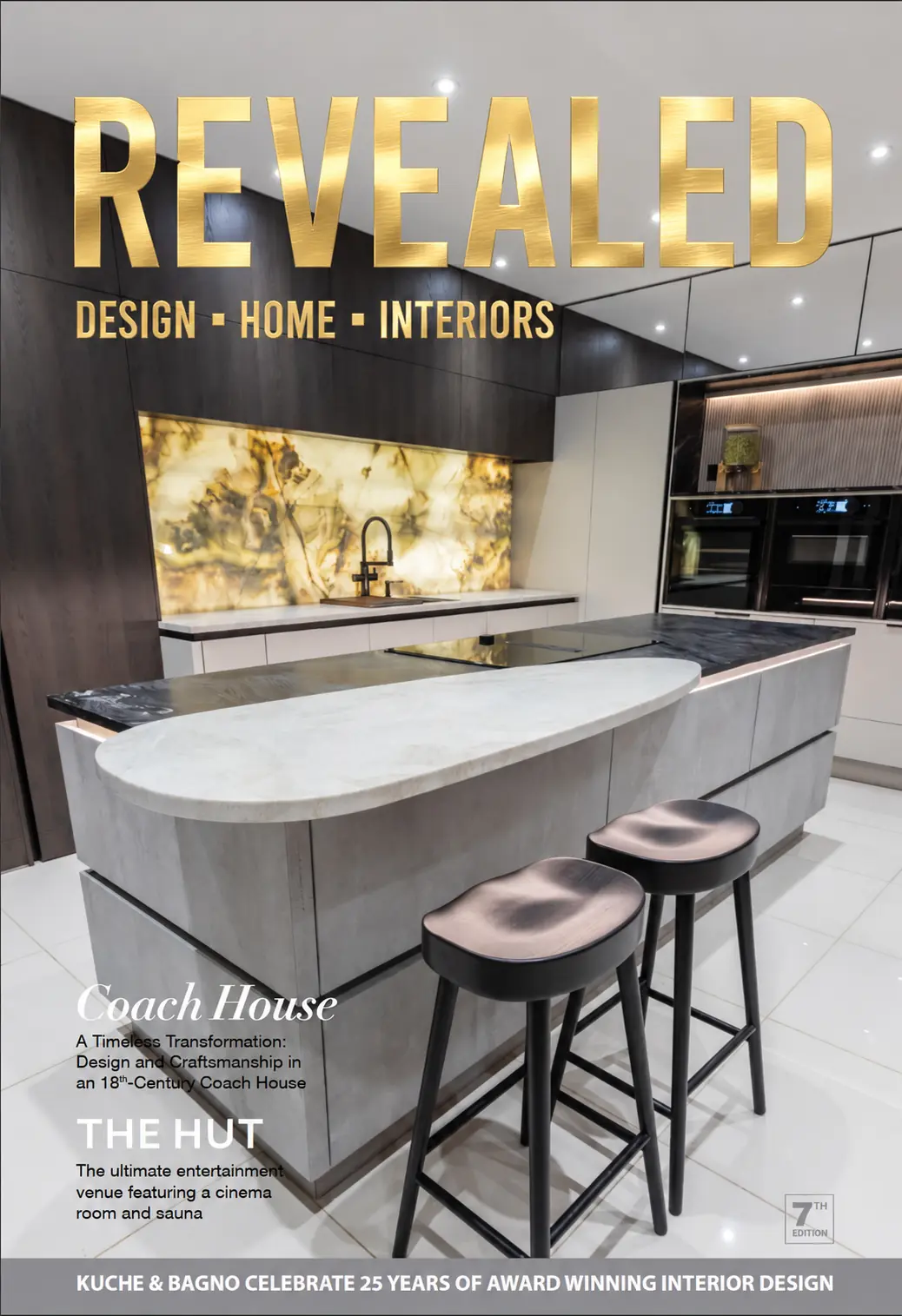
Lisa’s perspective · Inspired by Kas Bordier & MAVI
Designing for
the life within.
Light. Air. Sound. Materials.
A richer conversation about the places we call home.
I have always been interested in how a space makes us feel. Years of looking closely at hotels, spas, nature and the homes we create have made that curiosity part of the way I design.
Kas Bordier’s work with MAVI brings a vocabulary to this conversation: longevity architecture and interior biology. These are ideas I want to explore, understand and bring into the conversations we have with our clients.
Explore the language →
Kas Bordier is the founder of MAVI World. Her work considers the relationship between our surroundings and our wellbeing, bringing architecture, interior design and human biology into the same discussion.
In her published interviews, she returns to the things that can be easy to overlook: the air in a bedroom, the sound of building services, light late at night and the materials beneath a beautiful finish. MAVI brings these subjects together in its own MAVI 129 framework, covering ten areas and 129 environmental factors.
What resonates with me is the invitation to look more closely. A design meeting can make space for the way someone sleeps, cooks, bathes, works and unwinds. Those everyday experiences deserve as much thought as the colours and finishes.
This is my response to Kas’s published work. You can explore her approach directly through MAVI’s own introduction.
02 / The language behind the conversation
A few words.
A different way of looking.
Some terms belong to Kas’s way of describing her work; others come from wider design and environmental research. Here is how we understand them, and the questions they open up for a home.
Longevity architecture
MAVI uses this term for an approach that brings longevity research into the design of buildings. It places the conditions we live with every day within the architectural brief.
Our starting question: what should this home support, now and as life changes?
MAVI’s explanation ↗Interior biology
Kas uses “interior biology” to describe the connection between an interior environment and its occupants. Her conversation looks beyond appearance to light, air, sound and material choices.
Our starting question: what will someone experience here, throughout an ordinary day?
Read Kas’s interview ↗The exposome
A research term for environmental influences across a person’s lifetime. It encompasses much more than the home, including physical surroundings, diet and social factors.
Our starting question: which parts of the everyday environment can a considered design improve?
The research definition ↗Light & the day
Circadian rhythm
Our roughly 24-hour biological rhythms, influenced strongly by light and darkness. In a room, this opens a conversation about daylight, glare, evening lighting and darkness for sleep.
Blackout integrity
A term in MAVI’s glossary for how completely unwanted light is excluded from a bedroom. Curtains, door gaps and small indicator lights all belong in that discussion.
Read about circadian rhythms ↗Air & the specification
Indoor air quality
The quality of the air within a building. The practical conversation includes pollutant sources, ventilation and appropriate filtration, with maintenance considered from the beginning.
VOCs & off-gassing
Volatile organic compounds can be released into the air by some paints, adhesives, finishes and furnishings. This is a reason to ask for product information and emissions data when specifying materials.
Read about materials and VOCs ↗Nature & outlook
Biophilic design
Bringing a connection with nature into a building: daylight, garden views, planting and natural materials. It can begin with something as simple as where a chair faces.
Prospect & refuge
A design theory Kas discusses: the appeal of being able to see out while feeling sheltered. A protected seat with an open view is a useful way to picture it.
Hear Kas discuss these ideas ↗Sound & conversation
The Lombard effect
The tendency to raise our voices when the surroundings are noisy. Kas uses a busy restaurant to explain it. At home, it is a useful prompt to consider how a dining or living space sounds.
Acoustic comfort
Think about echo, privacy, appliance noise and sound travelling between rooms. The finish palette, layout and building details all deserve a place in the discussion.
The conversation about sound ↗Perception & feeling
Neuroaesthetics
A field concerned with how we perceive and respond to aesthetic experiences. Kas brings it into the conversation about interiors, layout and the way a space is experienced.
Sensory comfort
Our way of bringing the discussion back to daily life: the brightness of a room, its sounds, the feel of a surface and the amount of privacy someone wants.
Kas on the experience of a space ↗Warmth & moisture
Thermal comfort
How comfortable a person feels in the temperature of a space. MAVI considers temperature and humidity together; for us, this invites a coordinated conversation about heating, ventilation and the use of each room.
Healthspan
The period of life spent in good health, a central idea in the longevity discussion. It gives context to the conversation; it is not a promised outcome of a room design.
Explore MAVI’s terminology ↗“Good, healthy architectural design starts with attention, not money.”
Read or listen to the interview ↗
03 / Bringing the conversation home
From an idea
to a considered detail.
For Kuche & Bagno, the value of these conversations lies in the questions they help us ask. Here is where I would begin.
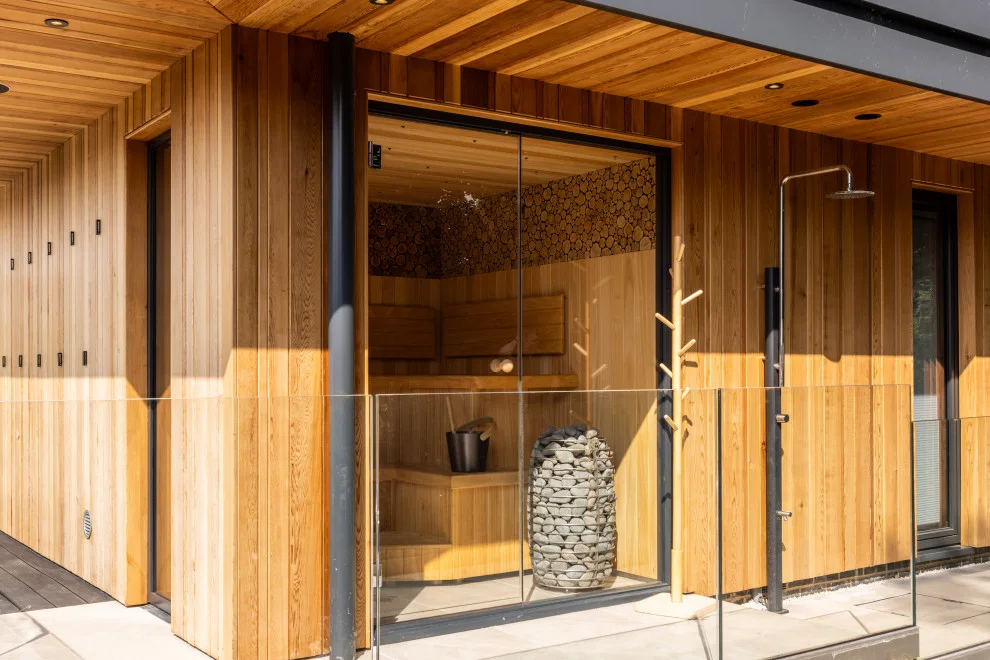
The kitchen
Make room for the everyday.
How does the room change from breakfast to dinner? Where will everyone sit and talk? Extraction, task lighting, comfortable circulation and the sound of appliances belong alongside cabinetry and worktops. Water choices begin with the household’s needs, the supply and the maintenance each system requires.
The bathroom
Consider both ends of the day.
A morning shower and a quiet visit at night ask different things of a room. We can discuss daylight, privacy, separate lighting scenes and easy-to-reach controls, alongside the ventilation and moisture management that make the room work.
The bedroom & the wider home
Give rest a place in the brief.
Think about what you see from the bed, where light enters, noise from adjoining rooms and the feel of the space. Then ask how the house supports time outside, cooking together, a quiet moment or a conversation with friends.
I love the moment when an idea becomes a sketch and the team begins to develop it together. This conversation belongs there, early in the process, when there is room to ask better questions and consider the details properly.
Behind our design decisions →04 / A personal influence
Renée Mascari.
Mentor & friend.
My mentor and very good friend Renée Mascari often brings neurodiversity into the kitchen conversation. Those discussions remind me that each of us experiences light, sound, colour and activity differently, and that we need to begin with the individual.
For me, this connects with the wider questions of air quality, lighting and wellbeing. I have given Renée a feature of her own, exploring sensory comfort, everyday kitchen routines and the personal connection of her artwork at Ash House.
Read the Renée Mascari feature →05 / Continue exploring
Read. Listen.
Look a little closer.
Start with Kas’s own words, then explore the wider research and Lisa’s perspective.
An independent Kuche & Bagno editorial, crediting Kas Bordier and MAVI as a source of inspiration. MAVI 129 is MAVI’s own framework; this page does not represent a partnership or a MAVI assessment service. Photography shows Kuche & Bagno’s own work.
Your home, thoughtfully considered
What would living well
look like for you?
Bring your ideas, your routines and the details that matter. We can explore how they might shape the brief for your home.