


Health & wellness · Bathroom innovation
What your toilet could tell you about your health.
From a page in Revealed to the latest urine and stool trackers. What can they tell us, and what is available in the UK?

Founder, Kuche & Bagno · Editor of Revealed
· 7 minute read
Back in the 2018 edition of Revealed Design Home Interiors, published in December 2017, I featured the Duravit BioTracer in our Tech Watch pages. The idea was fascinating: use the toilet as normal, and let it collect information about your health.
Looking at that page again has brought the conversation right back. We are used to watches and rings recording parts of our daily lives. Could the bathroom become another place where we learn more about ourselves, through a routine we already have?
It is already happening, although the products do quite different things. And it is a wider story than the American market: urine-testing technology is already available in the UK, while new stool-monitoring products are being sold in the US and Japan.[3][5][6]
From the Revealed archive
What happened to Duravit BioTracer?
Revealed 2018 · Tech Watch
Featured on the spread displayed as 58–59 in the Issuu reader.
Duravit presented BioTracer at ISH Frankfurt in March 2017. Its announcement described a functioning prototype that automatically collected a small urine sample, tested it using a replaceable cartridge and sent results to an app. The proposed ten measurements included glucose, white blood cells, protein, blood and pH.[1]
That was the product I included in Revealed. Its later iF Design Award entry described a concept, with a prospective launch listed as “after 2018”. An exhibition appearance and a design award, however, do not establish that a product reached the shops.[2]
I have not been able to verify a commercial UK launch, or find an official Duravit explanation of the project’s eventual fate. Calling it formally cancelled, or attributing its absence to regulation or cost, would go beyond what is publicly established. The confirmed story is an ambitious prototype; what happened behind the scenes remains an open question.
Revisiting it is a reminder of how long bathroom innovation can take to move from an intriguing demonstration into something we can specify for a home.
Understanding the difference
There is more than one way to read the signals.
“Smart toilet” is a very broad description. A heated seat, cleansing spray or automatic flush does not tell you whether a toilet can analyse anything. For health tracking, the useful question is exactly what the device measures.
Some products use optical sensors to observe stool shape, colour and bathroom patterns. Others collect urine and test selected chemical markers. An image of a bowel movement and a urine test answer different questions; neither provides a complete picture of someone’s health.
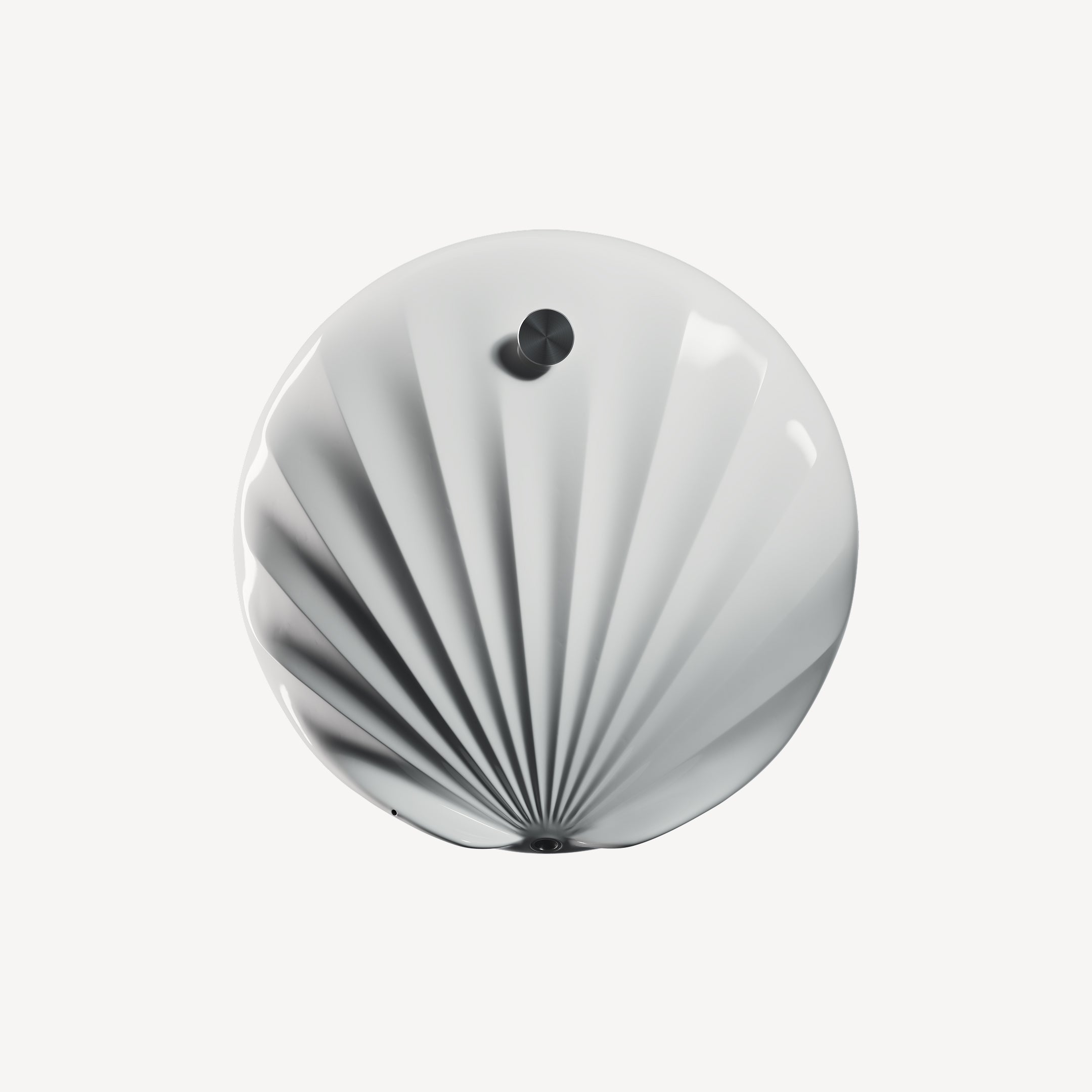
Withings U-Scan · Available in the UK
A urine test within the toilet.
Withings U-Scan sits inside the toilet and collects urine for analysis through a cartridge. Its UK shop offers U-Scan Nutrio and U-Scan Calci. Nutrio tracks hydration-related readings, urinary vitamin C, ketones and urine acidity; Calci focuses on urinary calcium, acidity and hydration-related readings.[3]
This is urine analysis, so it does not scan your stool. Withings describes Nutrio as a product for general fitness and wellness, rather than diagnosing conditions or deficiencies. There are ongoing cartridge costs to consider as well as the initial device.[3]
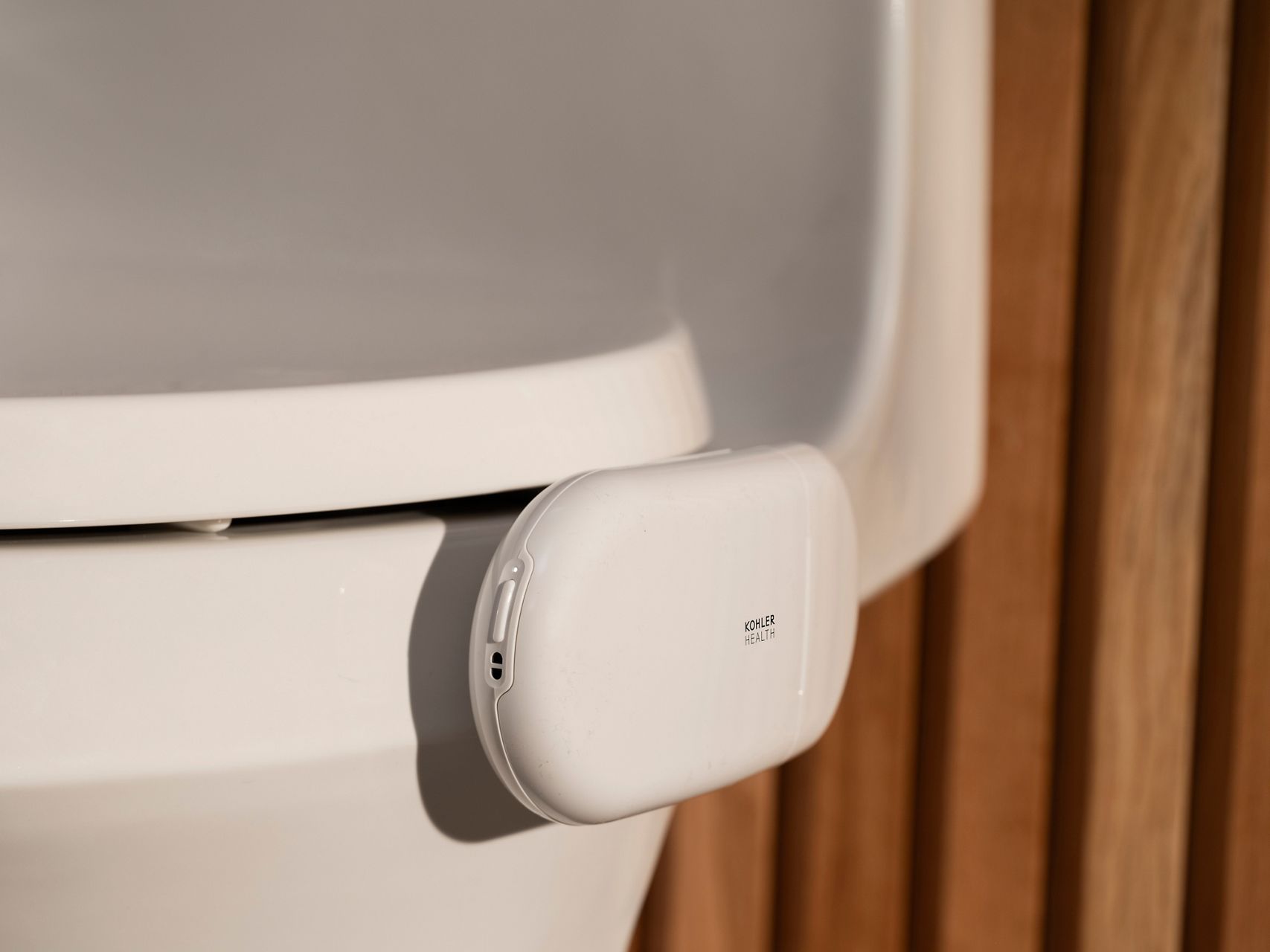
Kohler Dekoda: an attachment for an existing toilet.
Kohler’s Dekoda uses optical sensors and spectroscopy, which examines how light interacts with the bowl’s contents. Kohler says it provides insights into bowel patterns and hydration, with alerts for signs of blood. Results appear in its app, and a membership is required. Each session begins with user authentication.[4]
It is being marketed through Kohler’s US sales channels. At the time of writing, I could not verify a UK launch date. Its appeal from a design perspective is the possibility of adding monitoring without replacing the whole WC.
Throne One: following everyday patterns.
Throne One also clips onto a toilet. Its manufacturer describes tracking stool form and frequency, hydration estimates and bathroom habits. It also offers urinary-flow trends, with measurement conditions that need checking for the intended user. Throne explicitly calls it a general wellness product, not a medical device.[5]
Throne’s current FAQ says it is US-only and requires a US billing address. International expansion is planned, but the FAQ gives no UK date.
TOTO: stool scanning is already on sale in Japan.
TOTO introduced the NEOREST LS-W and AS-W in Japan in August 2025. Their Stool Scan feature uses sensors to assess stool shape, colour and amount, with information sent to the TOTO Wellness app. TOTO’s published announcement identifies these models as Japan-only.[6]
This is a specific feature on specific models. It should not be assumed that a WASHLET or NEOREST sold in the UK includes it.
The position on 29 October 2026
Is it coming to the UK?
For urine testing, it has already arrived through Withings. For the stool-monitoring products discussed here, a confirmed UK release date remains the missing piece. Overseas availability and plans to expand internationally are not a promise of a British launch.
| Product | Main focus | Availability |
|---|---|---|
| Withings U-Scan | Selected urine markers | Listed for sale in Withings’ UK store.[3] |
| Kohler Dekoda | Bowel patterns, hydration and blood-presence alerts | US sales confirmed; UK launch date unverified.[4] |
| Throne One | Stool and urinary patterns | US-only; international plans, no UK date stated.[5] |
| TOTO LS-W / AS-W | Stool shape, colour and amount | Launched in Japan; no confirmed UK date found.[6] |
I can see this becoming a more familiar part of the bathroom conversation. For anyone planning a room now, though, I would work from the products and support actually available locally. It is too early to build a specification around a promised arrival that has no confirmed date.
Living with the technology
The practical details still matter.
A useful device has to fit the bathroom and the people using it. Before choosing one, I would want to check compatibility with the exact pan and seat, cleaning requirements, charging, app support and the ongoing cost of cartridges or membership. A compact attachment still needs room to work properly.
Privacy is part of that design brief. How does the device recognise each person? What happens when a guest uses the bathroom? What is stored, who can access it, and how can it be deleted? Those questions deserve as much attention as the finish or the installation.
For me, the most interesting possibility is making changes easier to notice over time. I would want information that is understandable and useful, without turning every visit to the bathroom into another score to worry about.
Knowing what the information means
Useful observations, with clear limits.
A wellness score or an alert about blood is not a diagnosis. These devices should not be treated as a way to rule out bowel cancer, an infection or another medical condition. A reassuring app result should never override symptoms or delay medical advice.
NHS bowel screening uses a faecal immunochemical test, or FIT, on a collected stool sample. A consumer toilet tracker is not a replacement for that screening or any test recommended by your clinician.[7]
If you notice blood in your stool, an unexplained change in bowel habit or other concerning symptoms, contact your GP. NHS advice is to seek an urgent GP appointment or NHS 111 help for black or dark-red stool or bloody diarrhoea.[8]
A designer’s perspective
A familiar room, with another role to consider.
The question that interested me when I featured BioTracer still feels relevant: could a familiar bathroom routine help us understand our bodies a little better? There are now products trying to make that idea practical. I will be watching how they develop, and how comfortably they fit into real homes.
Sources & further reading
Product features and availability checked on 29 October 2026. Manufacturer descriptions explain what the products claim to measure; they do not by themselves establish improved medical outcomes. The Revealed reference comes from Lisa’s 2018 Tech Watch feature, published on 17 December 2017.
- Duravit’s BioTracer announcement, 14 March 2017 — the prototype, testing system and proposed measurements.
- iF Design: BioTracer — the concept and its prospective launch entry.
- Withings UK: U-Scan range and Nutrio specifications and intended use.
- Kohler Health: how Dekoda works, US product information and blood-presence tracking.
- Throne’s current FAQ — features, US-only availability, membership and wellness status.
- TOTO’s Japanese launch announcement and December 2025 English release (PDF) — Stool Scan and Japan-only models.
- NHS bowel cancer screening.
- NHS guidance on bowel symptoms and seeking help.