


The Nervous System Home

Why I’m Redesigning My Own Sleeping Sanctuary After More Than 20 Years
There is a certain irony in working within the kitchen, bathroom and interiors industry for over three decades, yet having lived with the same bedroom and ensuite since moving into my home in 2004.
But perhaps that says something important as well.
Good design, timeless materials and quality craftsmanship should have longevity.
Despite the constantly changing trends around us, many of the original elements in my home still look virtually brand-new today, more than 20 years later. The natural flooring throughout the house has barely aged. The real oak staircase looks exactly as it did when it was first installed. The granite surfaces remain timeless, whilst the wooden windows continue to bring warmth and softness that modern synthetic materials often struggle to replicate. In many ways, this home became an accidental experiment in sustainable longevity before the industry truly began discussing the subject.
I have never believed in changing things simply for the sake of change. The construction and interiors industries can sometimes become trapped in cycles of replacement, trend turnover and cosmetic upgrades, when in reality some of the most sustainable choices are often the materials and products that quietly last for decades. There is something deeply reassuring about living with materials that age gracefully, or in some cases barely appear to age at all.
However, I now feel I have reached a point in my life where I do have a genuine reason to redesign these spaces. Not for aesthetics alone, but for health, recovery, nervous system regulation and sleep optimisation.
Over the past few years, through both personal health challenges and extensive wellness research, I have become increasingly fascinated by the relationship between our environment and our physiology.
We spend enormous amounts of money discussing supplements, cold plunges, wearables and performance hacks. Yet far less attention is often given to the architecture of the spaces we spend most of our lives in.
The light we wake up to, the air we breathe whilst sleeping, the materials slowly off-gassing around us, humidity levels, acoustics, artificial light exposure after sunset and even the psychological effect of textures and harsh surfaces all have the potential to influence how our nervous system functions on a daily basis.
I genuinely believe the future of wellness will increasingly move towards preventative environmental design rather than simply reactive health optimisation. Perhaps the most important wellness technology is not something we wear or plug in, but the environment we surround ourselves with every single day.
What I also find particularly interesting is the wider cultural shift now underway in wellness-led hospitality and restorative environments. For many years, wellness was often viewed as separate from architecture and interior design, but increasingly the two worlds are merging.
The emergence of Six Senses London feels incredibly significant within the UK market. Rather than simply offering luxury aesthetics, spaces like this are beginning to prioritise sleep, nervous system regulation, acoustic comfort, lighting, thermal experiences, air quality and emotional wellbeing as part of the overall guest experience. The environment itself becomes part of the therapy.
I have also been fascinated by the rise of projects such as Long Lane, a wellness-led members' club and hospitality concept currently being developed in West Sussex. The founders have documented much of the journey publicly, helping to shine a light on a growing movement towards environments designed around restoration, slower living, sensory calm and genuine wellbeing rather than overstimulation and excess. What excites me most is that these conversations are no longer limited to destination spas or luxury resorts abroad. They are beginning to influence how we think about our own homes and everyday environments here within the UK.
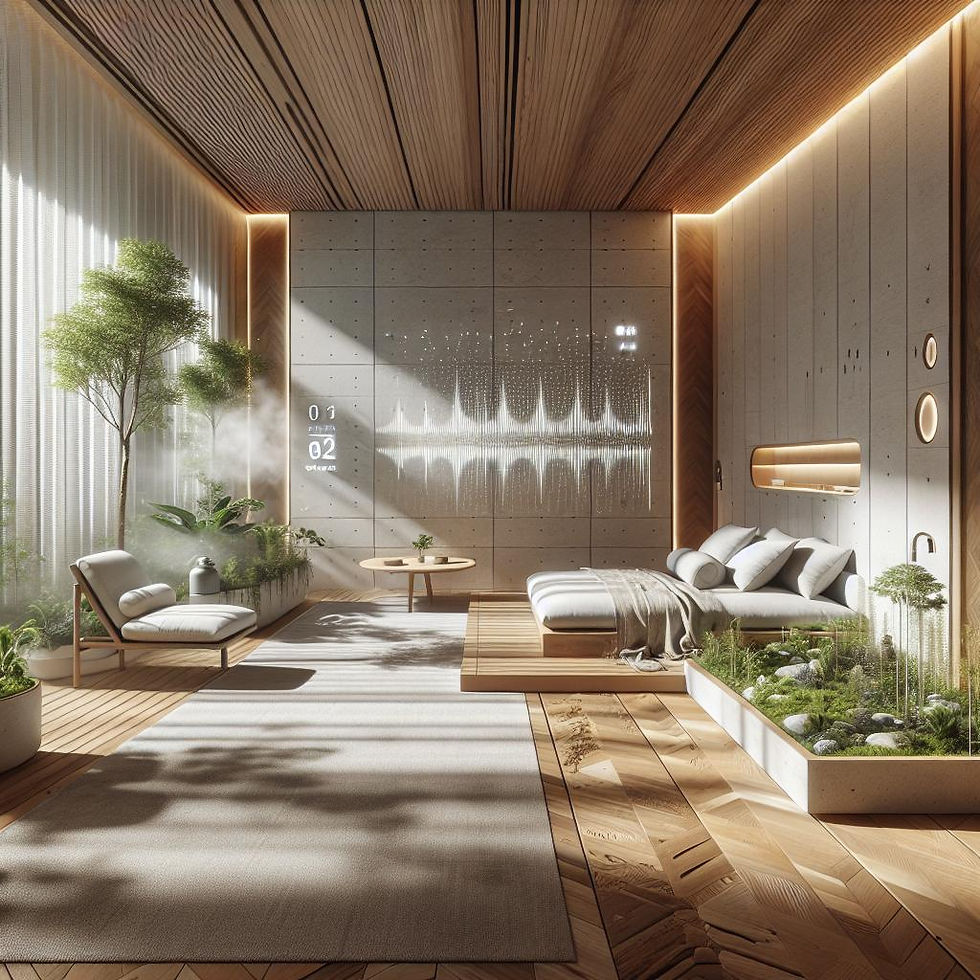
I have therefore decided to completely redesign my own sleeping quarters and ensuite, not simply as a renovation project, but almost as a living research project. A sanctuary intentionally designed around nervous system support, circadian rhythm alignment, recovery and restorative wellbeing. This project will serve as a testing ground for ideas, materials, technologies, and concepts that I hope to eventually integrate into future client projects.

One of the most important areas I want to explore is circadian rhythm lighting and how light exposure influences sleep quality, recovery, hormone regulation and overall wellbeing. I am particularly interested in optimal lux levels throughout the day, softer evening lighting, and creating spaces that feel calming to the nervous system rather than overstimulating. I also want to explore clean air systems and humidity control, especially in sleeping environments where we spend a significant portion of our lives.
Materiality will play a huge role within the project. I want to research the best natural wall finishes, low-toxin materials and furnishings that minimise unnecessary chemical exposure and off-gassing. Equally important will be acoustic comfort, sound integration, and window dressings designed to support both natural light management and sleep quality. The overall design direction will be minimalist, but deeply warm, calming and restorative rather than cold or clinical.
The ensuite itself will become entirely wellness-led. I already have a beautiful Finnish garden sauna outside, which has become an important part of my own recovery and wellness routine, but I now want to explore additional thermal and water-based experiences internally within the home. Steam, thermal bathing concepts inspired by Turkish bathing rituals, natural materials, sensory lighting and soothing acoustics all fascinate me as part of a more holistic wellbeing environment.

Interestingly, I already feel I am starting from a strong foundation because many of the original materials used throughout my home were natural and built to last. My bed frame is solid wood, and I already use an Eight Sleep system to optimise sleep temperature and recovery. Rather than stripping everything away unnecessarily, this project is more about thoughtfully refining and evolving the environment around the foundations that already exist.
I sometimes wonder whether modern wellness has become slightly distracted by surface-level optimisation. Cold plunges, supplements, wearables and performance metrics absolutely have value, but I increasingly believe the bigger conversation may actually lie within the spaces we inhabit every single day. The homes we build, the materials we surround ourselves with and the nervous system state our environments either create or disrupt.
Perhaps true wellness design is less about adding endless interventions and more about removing the environmental stressors we have unintentionally normalised.
This project is something I feel deeply passionate about, and I plan to document the journey openly.
I would love to connect with architects, lighting specialists, wellness experts, material innovators and manufacturers who are exploring similar ideas around restorative design, healthy homes, longevity architecture and nervous-system-aware interiors.
If this resonates with you, I would genuinely love to hear from you as I begin this next chapter of discovery.
Here’s to creating homes that help us feel calmer, healthier and more human.
Lisa J Melvin
This looks like an interesting project, what window dressing are you going to use and what is the best light to wake up to?